

Industrial floor scrubbers are indispensable tools for maintaining clean and safe environments in commercial settings, but they can pose significant operational risks if not handled correctly. Due to their heavy weight, liquid usage, and motorized operation, accidents involving these machines can cause serious injuries or damage property. In this post, we’ll discuss essential safety practices that every operator should know to ensure a secure and efficient working environment.
1. Perform Pre-Operation Inspections:
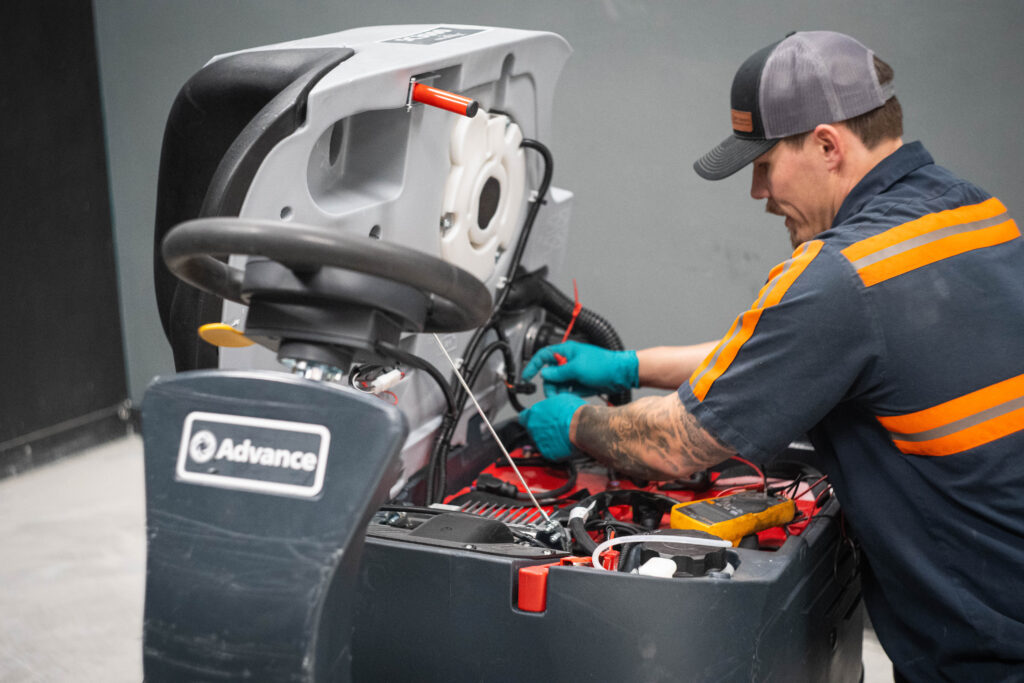
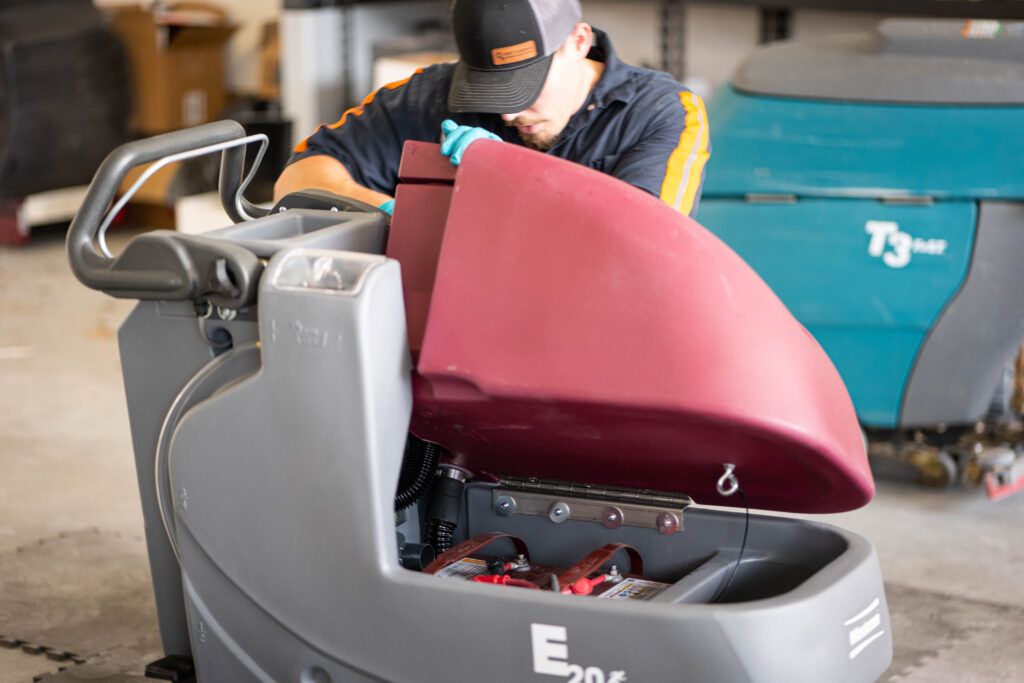
Safety begins before you even turn on the machine. Operators should conduct a quick daily inspection to ensure the floor scrubber is safe to use. Check for any visible fluid leaks, inspect the condition of the squeegee and brushes, ensure the battery connections are tight, and verify that the brakes and steering are fully responsive. Addressing minor mechanical issues early prevents accidents during operation.
2. Clear the Cleaning Area of Debris
Before driving or pushing a floor scrubber, the operator must scan the floor and remove large solid debris such as wooden pallet splinters, metal scraps, or plastic wrapping. If left on the ground, these items can wrap around cylindrical brushes, clog the squeegee hose, or burn out the brush drive motor, creating a mechanical failure and a sudden hazard in the middle of a shift.
3. Use Slip-Resistant Footwear and Warning Signs
Floor scrubbers dispense water and detergents, leaving a temporary trail of moisture. To prevent dangerous slip-and-fall incidents, operators should always wear slip-resistant industrial footwear. Additionally, it is vital to place visible “Wet Floor” caution signs at the entrances of the area being cleaned to protect employees, customers, or supermarket shoppers from unexpected wet spots.
4. Safe Chemical Handling and Ventilation:
Mixing cleaning chemicals requires strict adherence to manufacturer instructions. Operators must wear proper personal protective equipment (PPE), such as gloves and safety glasses, when filling the solution tank. Furthermore, always make sure the disposal area is well-ventilated when emptying and cleaning the recovery tank to avoid inhaling concentrated chemical vapors or fumes.
5. Maintain Safe Operational Speeds:
Industrial scrubbers, especially heavy ride-on models, carry substantial weight when fully loaded with water. Operators must maintain a slow, controlled speed, particularly when turning sharp corners or navigating busy supermarket aisles. Sudden turns at high speeds can cause the machine to tip over, lose braking efficiency on slick surfaces, or collide with retail shelves and facility infrastructure.
Conclusion:
Creating a culture of safety around your facility’s floor cleaning operations requires a balance of regular maintenance, clear warning systems, and properly educated staff. By integrating these 5 essential safety practices into your daily cleaning routine, you protect your inventory, your operators, and the public from avoidable accidents. At WAY Solutions, we are proud to offer professional training and technical repair services designed to keep your team safe, certified, and operating at peak efficiency.
Leave a Reply